
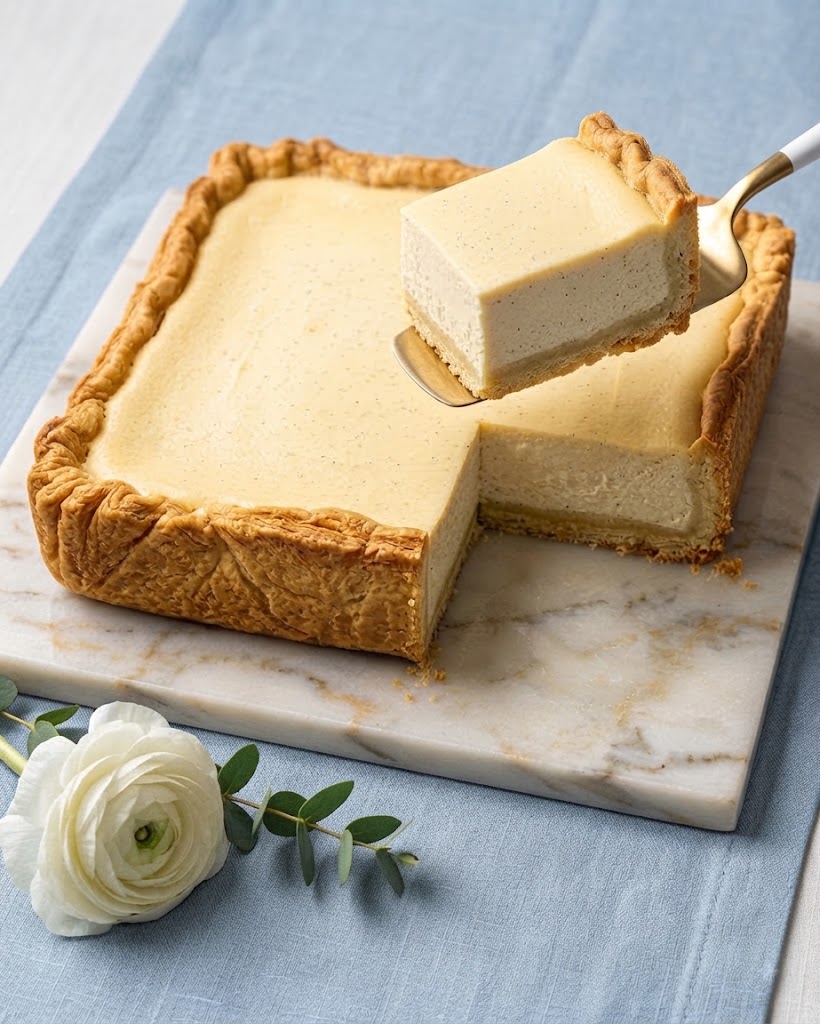

Torta della Nonna is a classic Italian dessert that feels wonderfully simple and elegant at the same time. This beloved Tuscan tart combines a buttery, tender pastry crust with a silky lemon-scented pastry cream, all finished with crunchy pine nuts and a light dusting of powdered sugar. Every slice offers a beautiful contrast between crisp pastry, creamy custard, and toasted nuts, making it a comforting dessert that’s perfect with coffee or tea.
Can This Torta della Nonna Support Weight Loss Goals?
Torta della Nonna is a traditional dessert containing butter, sugar, flour, eggs, and pastry cream, so it is best enjoyed in moderate portions as part of a balanced eating pattern. The eggs and milk contribute some protein, but this is not primarily a high-protein dessert. Keeping portions reasonable and pairing a slice with fruit or enjoying it after a balanced meal can help it fit into an overall calorie-conscious approach.
Does Torta della Nonna Fit a Highprotein Lifestyle?
Traditional Torta della Nonna is not considered a highprotein dessert, although eggs and milk provide some protein. The pastry and sugar contribute most of the carbohydrates, so it is also not a low-carb recipe. If you’re following a highprotein lifestyle, enjoy a smaller slice alongside Greek yogurt or another protein-rich food. The recipe can also be modified with higher-protein dairy, although that will change its traditional texture and flavor.
Why This Recipe is Special
- Classic Italian dessert: A beloved combination of pastry, custard, pine nuts, and sugar.
- Creamy and buttery: Silky pastry cream contrasts beautifully with tender shortcrust pastry.
- Fresh lemon flavor: Lemon zest gives the custard a delicate citrus aroma.
- Elegant but approachable: It looks impressive while using familiar baking ingredients.
- Perfect with coffee: Its rich custard and buttery crust pair wonderfully with espresso or tea.
My Personal Experience
- The lemon pastry cream is the heart of this tart.
A little fresh lemon zest gives the custard a bright aroma without making it overly citrusy.
It balances the richness of the buttery pastry beautifully. - The pine nuts add an essential crunch.
They become lightly toasted as the tart bakes, giving the soft custard a wonderful textural contrast.
Their delicate nutty flavor also makes the finished tart unmistakably Italian. - Chilling the dough makes a noticeable difference.
Cold pastry is easier to roll and holds its shape much better during baking.
It also helps create a tender, crumbly crust instead of a greasy one. - The tart is even better once completely cooled.
Allowing the custard to set gives each slice clean layers and a beautifully creamy center.
A light dusting of powdered sugar just before serving completes the classic presentation.
Perfect For
Torta della Nonna is perfect for Sunday family dinners, afternoon coffee, Italian-themed gatherings, birthdays, holidays, dinner parties, brunch, afternoon tea, and special desserts. It can be made a day ahead, making it especially convenient when entertaining guests.
Why You’ll Love This Recipe
- Silky homemade custard
The lemon-infused pastry cream is smooth, rich, and delicately sweet.
It provides the creamy center that makes this tart so memorable. - Buttery shortcrust pastry
The pastry becomes tender and lightly crisp around the edges as it bakes.
It creates the perfect contrast with the soft custard. - Toasty pine nuts
Pine nuts add crunch and a subtle nutty flavor to every slice.
They also create the signature appearance associated with Torta della Nonna. - Make-ahead friendly
The tart needs time to cool and set, so preparing it ahead works beautifully.
The flavors also have time to settle and develop. - Elegant presentation
A simple coating of powdered sugar makes the finished tart look beautiful.
No complicated decoration is needed.
Common Mistakes to Avoid
- Overheating the pastry cream: Cook it gently and whisk constantly to prevent scrambled eggs or lumps.
- Skipping dough chilling: Warm dough can shrink during baking and become difficult to handle.
- Overworking the pastry: Mix just until the dough comes together for a tender crust.
- Cutting while hot: Let the tart cool completely so the custard can firm up and produce cleaner slices.
Required Equipment
- Mixing bowls — keep the pastry and custard ingredients organized during preparation.
- Whisk — creates a smooth pastry cream and prevents lumps.
- Rolling pin — evenly rolls the shortcrust pastry to the proper thickness.
- 9-inch (23 cm) tart pan — provides the traditional shape and supports the pastry during baking.
- Saucepan — gently cooks the lemon pastry cream.
- Parchment paper — makes lining and handling the pastry easier.
- Fine-mesh sieve — creates an exceptionally smooth custard by removing lumps.
- Cooling rack — allows the baked tart to cool evenly.
Storage Instructions
Store completely cooled Torta della Nonna covered in the refrigerator for up to 3–4 days because it contains homemade pastry cream.
Place the tart in an airtight cake container or cover it securely with plastic wrap. Avoid pressing the wrap directly against the custard surface if possible.
The tart can be frozen, although the pastry cream may become slightly softer after thawing. For best results, freeze individual slices in airtight freezer-safe containers for up to 1 month.
Thaw frozen slices overnight in the refrigerator. Allow refrigerated slices to sit at room temperature for approximately 15–20 minutes before serving for the best flavor and texture.
Do not leave the custard-filled tart at room temperature for extended periods.
Recipe Details
Preparation Time: 35 minutes
Cooking Time: 45 minutes
Chilling Time: 1 hour
Total Time: About 2 hours 20 minutes
Servings: 10 slices
Best Season: All-season
Total Calories: Approximately 390 calories per serving
Short Description
Torta della Nonna is a traditional Italian custard tart made with buttery shortcrust pastry and silky lemon pastry cream.
Toasted pine nuts add a delicate crunch while powdered sugar gives the dessert its classic finish.
A comforting, elegant dessert that’s especially delicious alongside coffee or espresso.
📝 Ingredients
For the Pastry
- 2 cups (250 g) all-purpose flour
- ½ cup (100 g) granulated sugar
- ½ cup (113 g) cold unsalted butter, cubed
- 1 large egg
- 1 large egg yolk
- 1 teaspoon vanilla extract
- 1 teaspoon finely grated lemon zest
- ¼ teaspoon salt
- 1–2 tablespoons cold water, only if needed
For the Pastry Cream
- 2 cups (480 ml) whole milk
- 4 large egg yolks
- ½ cup (100 g) granulated sugar
- ¼ cup (30 g) all-purpose flour
- 1 tablespoon cornstarch
- 1 teaspoon vanilla extract
- 1 teaspoon finely grated lemon zest
- Pinch of salt
For the Topping
- ½ cup (70 g) pine nuts
- 1 tablespoon powdered sugar, for dusting
Ingredient note: Whole milk provides the richest traditional pastry cream. Pine nuts are a defining ingredient, but they can be replaced with sliced almonds if necessary, although the flavor will be different.
Directions
- Make the pastry dough.
Add flour, sugar, and salt to a mixing bowl. Add cold cubed butter and rub it into the flour with your fingertips until the mixture resembles coarse crumbs. - Add the eggs and flavorings.
Add the egg, egg yolk, vanilla, and lemon zest. Mix gently until the dough begins to come together. - Adjust the dough.
If the mixture seems too dry, add 1 tablespoon cold water at a time. Stop as soon as a soft dough forms. - Chill the pastry.
Shape the dough into a disk, wrap it, and refrigerate for at least 1 hour. The dough should feel firm and thoroughly chilled. - Prepare the pastry cream.
Heat the milk in a saucepan over medium-low heat until steaming but not boiling. - Whisk the egg mixture.
In a separate bowl, whisk egg yolks, sugar, flour, cornstarch, salt, lemon zest, and vanilla until smooth and pale. - Temper the milk.
Slowly pour approximately ½ cup of the warm milk into the egg mixture while whisking constantly. This gradually raises the temperature and reduces the risk of curdling. - Cook the custard.
Pour the mixture back into the saucepan and cook over medium-low heat, whisking constantly for approximately 5–8 minutes. - Check the texture.
The pastry cream should become thick enough to coat the back of a spoon and hold soft peaks when whisked. - Strain and cool.
Pass the pastry cream through a fine-mesh sieve into a clean bowl. Cover the surface with plastic wrap and cool until lukewarm, then refrigerate. - Preheat the oven.
Heat the oven to 350°F (175°C). - Roll the dough.
Divide the chilled dough into two portions, with one slightly larger than the other. Roll the larger portion on a lightly floured surface to approximately ⅛ inch (3 mm) thick. - Line the tart pan.
Carefully transfer the larger pastry sheet into a 9-inch (23 cm) tart pan. Press it gently into the base and sides without stretching the dough. - Add the pastry cream.
Pour the cooled pastry cream into the crust and smooth the surface with a spatula. Leave a little room below the rim. - Roll the top crust.
Roll the remaining dough into a circle large enough to cover the tart. - Cover the filling.
Place the second pastry sheet over the custard. Press the edges together gently and trim away excess dough. - Seal the tart.
Crimp the edges lightly with your fingers or a fork. Make several tiny vents in the top crust to allow steam to escape. - Add pine nuts.
Lightly brush the top pastry with a little water or beaten egg if desired. Sprinkle the pine nuts evenly over the surface and gently press them into the dough. - Bake.
Bake at 350°F (175°C) for approximately 40–45 minutes, until the pastry is golden brown and the pine nuts are lightly toasted. - Cool completely.
Remove the tart from the oven and cool in the pan for approximately 1 hour. The custard should become firm enough to slice cleanly. - Finish and serve.
Dust lightly with powdered sugar just before serving. Slice with a sharp knife and serve chilled or slightly cool.
Highprotein cooking tip: Traditional Torta della Nonna is not a high-protein dessert. If you want a more protein-focused serving, pair a smaller slice with plain Greek yogurt rather than substantially changing the traditional pastry formula.
Nutrition Facts
Per Serving — Approximate
- Calories: 390 kcal
- Fat: 20 g
- Cholesterol: 125 mg
- Sodium: 145 mg
- Potassium: 150 mg
- Total Carbohydrates: 45 g
- Fiber: 2 g
- Net Carbs: 43 g
- Sugars: 23 g
- Protein: 8 g
- Calcium: 90 mg
Nutrition information is an approximate estimate and can vary depending on the exact ingredients, portion size, and amount of powdered sugar used.
Notes
- For smoother pastry cream: Whisk continuously while cooking and strain the finished custard.
- For tender pastry: Keep the butter cold and avoid overworking the dough.
- For better pine-nut flavor: Lightly toast the pine nuts beforehand, but avoid browning them too deeply.
- For stronger lemon flavor: Add an extra ½ teaspoon lemon zest to the pastry cream.
- For serving: Dust with powdered sugar immediately before serving for the prettiest finish.
- Storage: Refrigerate covered for 3–4 days.
- Freezing: Individual slices can be frozen for up to 1 month, although the custard texture may change slightly.
- Reheating: Reheating is not recommended; serve chilled or allow to stand at room temperature for 15–20 minutes.
- Allergy notes: Contains wheat, eggs, dairy, and pine nuts.
- Nut-free option: Pine nuts can be omitted, although they are traditional to the recipe.
- Flavor boost: Add a little orange zest alongside the lemon for a subtle citrus variation.
- Texture tip: Allow the tart to cool completely before slicing so the pastry cream has time to set.
- Make-ahead tip: Prepare the pastry cream and dough the day before and assemble and bake the following day.
Frequently Asked Questions
What is Torta della Nonna?
Torta della Nonna is a classic Italian tart made with shortcrust pastry, creamy pastry filling, pine nuts, and powdered sugar.
Can I make Torta della Nonna ahead of time?
Yes, it can be prepared a day ahead and refrigerated until you’re ready to serve it.
Why does my pastry cream have lumps?
Lumps usually occur when the custard is cooked too quickly or not whisked continuously, so gentle heat and constant whisking are important.
Can I use almond flour for the pastry?
You can replace part of the flour with almond flour, but using only almond flour will significantly change the dough’s structure and texture.
Can I freeze Torta della Nonna?
Yes, individual slices can be frozen for up to approximately one month, although the pastry cream may become slightly softer after thawing.
Should Torta della Nonna be served cold?
It can be served chilled or allowed to sit at room temperature for 15–20 minutes before serving for a softer, creamier texture.