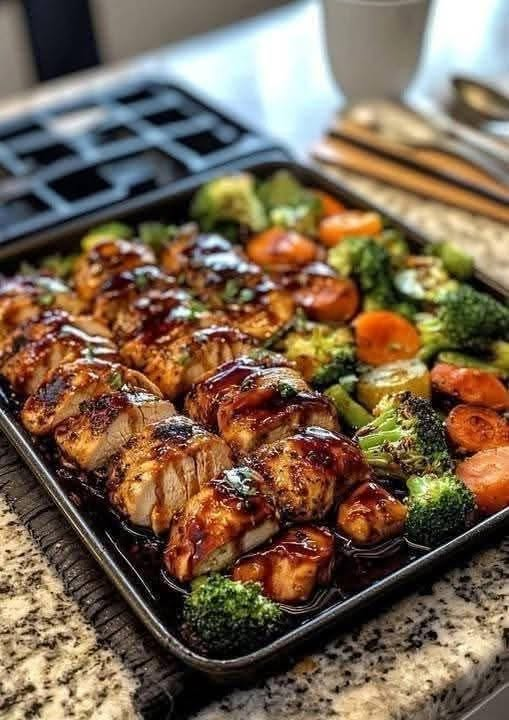

This Low-Carb Teriyaki Chicken & Veggies One Pan Meal is a delicious combination of tender chicken, crisp-tender vegetables, and a glossy homemade teriyaki-style sauce. The sauce brings together savory tamari, garlic, ginger, sesame, and a touch of sweetness without relying on a heavy sugar-loaded bottled sauce. Everything cooks in one pan, making this low-carb, highprotein-friendly dinner an easy choice for busy weeknights.
Can This Low-Carb Teriyaki Chicken & Veggies One Pan Meal Support Weight Loss Goals?
This meal can fit into a balanced weight-conscious eating pattern because it centers on lean chicken and non-starchy vegetables. Chicken provides substantial protein, while broccoli, bell pepper, zucchini, and cauliflower add volume and fiber. Using a homemade sauce also makes it easier to control added sugars and oil. Portion size and the overall balance of the day’s meals still matter, but this is a practical protein-forward option.
Does Low-Carb Teriyaki Chicken & Veggies One Pan Meal Fit a Highprotein Lifestyle?
Yes, this meal is naturally well suited to a highprotein lifestyle because chicken breast provides most of the protein while the vegetables add fiber and micronutrients. The homemade sauce uses low-sugar ingredients and avoids traditional sweet teriyaki sauce, helping keep the net carbs moderate. Broccoli and cauliflower provide additional fiber without contributing large amounts of carbohydrates. For an even higher-protein meal, slightly increase the chicken portion or serve it with a protein-rich side.
Why This Recipe is Special
- One-pan convenience: Chicken, vegetables, and sauce cook together with minimal cleanup.
- Low-carb friendly: Non-starchy vegetables replace traditional rice or noodles.
- Highprotein-friendly: Lean chicken makes this a protein-forward dinner.
- Homemade teriyaki flavor: Garlic, ginger, sesame, and tamari create a rich savory glaze.
- Weeknight ready: Everything comes together in roughly 30 minutes.
My Personal Experience
- The homemade sauce makes all the difference.
Fresh garlic and ginger give the chicken a much brighter flavor than a basic bottled sauce.
The small amount of sweetener balances the salty tamari without making the dish overly sweet. - The vegetables stay colorful and crisp-tender.
Cooking them in stages prevents delicate zucchini and peppers from becoming mushy.
Broccoli develops lightly browned edges while still keeping some bite. - The chicken absorbs the teriyaki flavor beautifully.
Cutting the chicken into evenly sized pieces helps everything cook at the same rate.
A final toss in the sauce gives the pieces a glossy, flavorful coating. - It is one of my favorite easy meal-prep combinations.
The chicken and vegetables hold up well when refrigerated and reheated.
It makes a convenient protein-rich lunch for the next day.
Perfect For
This one-pan meal is perfect for busy weeknight dinners, low-carb meal plans, keto-friendly meals, highprotein meal prep, family dinners, quick lunches, healthy-style dinners, and easy Asian-inspired meals. Serve it on its own or alongside cauliflower rice for an even heartier low-carb plate.
Why You’ll Love This Recipe
- Tender, flavorful chicken
Bite-sized chicken cooks quickly and absorbs the savory teriyaki-style glaze.
Every piece gets coated with garlic, ginger, sesame, and tamari flavor. - Plenty of vegetables
Broccoli, zucchini, peppers, and cauliflower create a colorful vegetable mix.
Their different textures make the meal more interesting than chicken alone. - Low-carb sauce
The homemade glaze avoids the large amount of sugar commonly found in bottled teriyaki sauces.
This keeps the overall dish more suitable for low-carb eating. - Highprotein-friendly
Chicken breast gives the meal a strong protein foundation.
It can easily be increased for anyone looking for a more protein-focused serving. - Minimal cleanup
Everything is cooked in a single large skillet.
That makes this recipe especially convenient on busy evenings.
Common Mistakes to Avoid
- Overcrowding the pan: Too much chicken at once can cause steaming instead of browning.
- Overcooking the vegetables: Add softer vegetables later so they remain crisp-tender.
- Making the sauce too sweet: Traditional teriyaki is often very sweet, so add sweetener gradually.
- Adding the sauce too early: Excessive simmering can cause the glaze to become too thick or sticky.
Required Equipment
- Large non-stick skillet — provides enough space to brown the chicken and vegetables evenly.
- Sharp chef’s knife — creates evenly sized chicken pieces and vegetables for consistent cooking.
- Cutting board — provides a stable surface for efficient ingredient preparation.
- Small bowl — makes it easy to whisk the teriyaki-style sauce before cooking.
- Wooden spoon or spatula — keeps ingredients moving without damaging the skillet.
- Measuring spoons — help maintain the correct balance of salty, acidic, and sweet flavors.
Storage Instructions
Allow leftovers to cool before transferring them to airtight meal-prep containers. Refrigerate for up to 4 days.
For meal prep, divide the chicken and vegetables into individual containers. Reheat in the microwave for 1–2 minutes, stirring halfway through, or warm gently in a skillet until heated through.
The meal can be frozen for up to 2 months, although zucchini may soften slightly after thawing. For best texture, freeze the chicken and firmer vegetables separately when possible.
To keep the meal highprotein-friendly, store it without rice or noodles and add cauliflower rice or another low-carb vegetable when serving.
Recipe Details
Preparation Time: 15 minutes
Cooking Time: 15 minutes
Total Time: About 30 minutes
Servings: 4
Best Season: All-season
Total Calories: Approximately 340 calories per serving
Short Description
Tender chicken and crisp-tender vegetables are coated in a glossy homemade low-carb teriyaki-style sauce.
Garlic, ginger, sesame, and tamari create bold Asian-inspired flavor without excessive sugar.
A quick one-pan, highprotein-friendly dinner that’s perfect for busy weeknights and meal prep.
📝 Ingredients
For the Chicken and Vegetables
- 1 ½ lb (680 g) boneless, skinless chicken breasts, cut into bite-sized pieces
- 1 tablespoon avocado oil or olive oil
- 2 cups broccoli florets
- 1 medium zucchini, sliced into half-moons
- 1 medium red bell pepper, sliced
- 1 cup cauliflower florets
- 2 green onions, sliced
- 1 tablespoon sesame seeds
For the Low-Carb Teriyaki Sauce
- ¼ cup low-sodium tamari
- 2 tablespoons water
- 1 tablespoon rice vinegar
- 1 tablespoon sesame oil
- 1 tablespoon powdered erythritol or monk-fruit sweetener, adjusted to taste
- 1 tablespoon fresh ginger, finely grated
- 2 cloves garlic, minced
- 1 teaspoon cornstarch or ½ teaspoon xanthan gum, optional for thickening
- ½ teaspoon red pepper flakes, optional
Ingredient note: Use gluten-free tamari instead of regular soy sauce when needed. For a stricter keto version, choose a zero-sugar sweetener and xanthan gum instead of cornstarch.
Directions
- Prepare the sauce.
In a small bowl, whisk together tamari, water, rice vinegar, sesame oil, sweetener, ginger, garlic, and red pepper flakes. - Prepare the chicken.
Pat the chicken dry with paper towels and cut it into evenly sized pieces. This helps it brown properly and cook at the same rate. - Heat the skillet.
Place a large skillet over medium-high heat. Add the avocado or olive oil and allow it to heat for approximately 30 seconds. - Brown the chicken.
Add the chicken in a single layer. Cook for 4–5 minutes, turning occasionally, until the pieces are golden on the outside and nearly cooked through. - Add the broccoli and cauliflower.
Stir in the broccoli and cauliflower. Cook for 3–4 minutes, stirring occasionally. They should begin to soften while retaining some firmness. - Add the peppers and zucchini.
Add the sliced bell pepper and zucchini. Cook for another 3–4 minutes until the vegetables are crisp-tender and the chicken is fully cooked. - Add the sauce.
Reduce the heat to medium-low. Pour the prepared teriyaki sauce over the chicken and vegetables. - Glaze the meal.
Toss everything together and simmer for 2–3 minutes. The sauce should become glossy and lightly coat the chicken and vegetables. - Thicken if desired.
If using cornstarch, mix it with a tablespoon of cold water before adding it to the skillet. Simmer for approximately 1 minute until thickened. If using xanthan gum, sprinkle it very lightly while stirring continuously. - Check the chicken.
The chicken should be completely cooked through with no pink center. If using a thermometer, the thickest pieces should reach 165°F (74°C). - Finish the dish.
Turn off the heat and sprinkle with sliced green onions and sesame seeds. - Serve immediately.
Serve the chicken and vegetables hot on their own or over cauliflower rice for a complete low-carb meal.
Highprotein cooking tip: Use lean chicken breast and avoid adding unnecessary high-carb sides. Increasing the chicken slightly or pairing the dish with edamame can make the meal even more protein-forward.
Nutrition Facts
Per Serving — Approximate
- Calories: 340 kcal
- Fat: 15 g
- Cholesterol: 110 mg
- Sodium: 690 mg
- Potassium: 820 mg
- Total Carbohydrates: 13 g
- Fiber: 4 g
- Net Carbs: 9 g
- Sugars: 6 g
- Protein: 40 g
- Calcium: 75 mg
Nutrition information is an approximate estimate and can vary depending on the chicken, tamari, sweetener, oil, and vegetables used.
Notes
- For keto: Use a zero-sugar sweetener and xanthan gum instead of cornstarch.
- For more protein: Increase the chicken to 2 lb or add a side of edamame.
- For more vegetables: Add mushrooms, shredded cabbage, asparagus, or snap peas.
- For extra heat: Add chili garlic sauce, fresh chili, or additional red pepper flakes.
- For stronger ginger flavor: Add another teaspoon of freshly grated ginger.
- Storage: Refrigerate leftovers in airtight containers for up to 4 days.
- Reheating: Warm gently in a skillet or microwave until heated through.
- Freezing: Freeze for up to 2 months, although zucchini may soften after thawing.
- Allergy notes: Tamari is usually gluten-free but can contain soy; sesame oil and sesame seeds are also potential allergens.
- Sauce tip: Taste the sauce before adding it to the pan and adjust sweetness or acidity as desired.
- Flavor boost: Finish with lime juice, fresh cilantro, sliced green onions, or a sprinkle of toasted sesame seeds.
Frequently Asked Questions
Is this teriyaki chicken recipe keto-friendly?
Yes, using a zero-sugar sweetener and xanthan gum instead of cornstarch keeps the recipe particularly suitable for keto eating.
Can I use chicken thighs instead of chicken breast?
Yes, boneless skinless chicken thighs work well and produce a juicier, richer result.
Can I use regular soy sauce?
Yes, regular soy sauce can replace tamari, although tamari is useful when a gluten-free option is needed.
What vegetables work best in this one-pan meal?
Broccoli, cauliflower, bell peppers, zucchini, mushrooms, cabbage, and asparagus all work well.
How can I make this meal higher in protein?
Increase the chicken portion or serve it with a protein-rich side such as edamame.
Can I make the teriyaki sauce ahead of time?
Yes, the sauce can be mixed up to 3 days ahead and stored covered in the refrigerator.