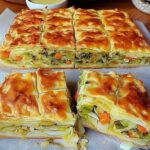


These homemade croissants are buttery, tender, lightly crisp, and layered with a satisfying golden finish.
Made with almond flour, vital wheat gluten, and whey protein, they offer a more high-protein, low-carb twist on the classic French favorite.
They’re especially appealing when you want a comforting pastry without the carb load of traditional croissants.
Can This Homemade Croissants Support Weight Loss Goals?
These croissants can fit into a weight-conscious eating pattern when enjoyed in sensible portions. The combination of whey protein, vital wheat gluten, egg, and Greek yogurt provides more protein than a conventional croissant, which can make the pastry more filling. Their relatively low net-carb content can also work well within a lower-carb meal plan. However, weight-loss results depend on the overall balance of your diet, portions, and activity rather than one recipe alone.
Does Homemade Croissants Fit a High-Protein Lifestyle?
Yes, these croissants can fit a high-protein lifestyle better than traditional versions. Each croissant provides approximately 16 g of protein with about 2 g of net carbs, based on the recipe’s estimated nutrition. Almond flour keeps the carbohydrate content lower, while whey protein and vital wheat gluten increase the protein content. Greek yogurt and egg also contribute additional protein and moisture to the dough.
Why This Recipe Is Special
- High-protein twist — Whey protein and vital wheat gluten give these croissants considerably more protein than classic pastry dough.
- Low-carb friendly — Almond flour and psyllium help keep the net-carb count relatively low.
- Buttery and comforting — Butter creates rich flavor and helps develop tender, crisp layers.
- Keto-friendly by macros — With approximately 2 g net carbs per croissant, they can fit many low-carb or keto-style meal plans.
- Freezer-friendly — Bake a batch ahead and freeze individual croissants for convenient breakfasts and snacks.
My Personal Experience
- I loved the buttery aroma while baking.
The croissants filled the kitchen with a warm, bakery-style fragrance as the buttered layers turned golden. - The texture surprised me for a low-carb pastry.
The outside became lightly crisp while the inside stayed soft and tender rather than dry. - The dough was easier to handle when chilled.
Keeping the dough and butter cool made rolling and folding much less messy during lamination. - They made a satisfying breakfast.
The added protein made one croissant feel more substantial than a typical pastry. - Freezing individual portions worked especially well.
Having ready-to-reheat croissants made busy mornings much easier without baking another batch.
Perfect For
These homemade croissants are ideal for breakfasts, weekend brunches, meal prep, afternoon snacks, and low-carb dessert plates. They also work well as a make-ahead option for keto-style meal plans or as a comforting pastry alongside eggs, Greek yogurt, or another protein-rich food.
Why You’ll Love This Recipe
- Rich buttery flavor
Butter gives every bite a familiar croissant-like richness while helping create a beautifully golden exterior. - More protein than traditional croissants
Whey protein, vital wheat gluten, egg, and Greek yogurt make this version especially useful for protein-conscious eaters. - Low in net carbs
Almond flour and psyllium help produce a much lower net-carb pastry than one made primarily with wheat flour. - Crispy outside, soft inside
Proper chilling and gentle handling help preserve the contrast between the browned exterior and tender center. - Great for meal prep
The finished croissants can be refrigerated or frozen and reheated when you want a quick homemade snack.
Common Mistakes to Avoid
- Letting the butter become too soft — Warm butter can melt into the dough instead of forming distinct layers.
- Overworking the dough — Excessive kneading or rolling can make the croissants dense rather than tender.
- Skipping the chilling periods — Cold dough is essential for keeping the butter firm during lamination.
- Overbaking — Bake until deeply golden but remove them before the edges become excessively dark or dry.
Required Equipment
- Large mixing bowl — Gives the dough enough room to combine evenly without spilling.
- Rolling pin — Helps create consistent dough thickness for better layering.
- Pastry brush — Makes it easy to distribute egg wash evenly for golden browning.
- Sharp knife or pizza cutter — Creates clean triangular pieces for shaping.
- Baking sheet — Provides a stable surface for proofing and baking the croissants.
- Parchment paper — Prevents sticking and simplifies cleanup.
- Wire cooling rack — Allows steam to escape so the bottoms stay crisp.
Storage Instructions
Allow baked croissants to cool completely before storing. For short-term storage, place them in an airtight container and refrigerate for up to 4 days. For longer storage, wrap each croissant individually in parchment or plastic wrap and place them in a freezer-safe bag or airtight container for up to 2 months.
For the best texture, reheat refrigerated croissants in a 325°F (165°C) oven for 5–8 minutes. Frozen croissants can be reheated at 325°F (165°C) for approximately 10–15 minutes, depending on size. Proper storage does not change their protein content, although the texture may become slightly less crisp over time.
Recipe Details
- Preparation Time: 35 minutes
- Chilling/Laminating Time: 1 hour 30 minutes
- Cooking Time: 18–22 minutes
- Total Time: About 2 hours 30 minutes
- Servings: 8 croissants
- Best Season for This Recipe: All-season
- Total Calories Per Serving: Approximately 247 calories
📝 Ingredients
Dough
- 1 cup (120 g) finely ground almond flour
- ½ cup (60 g) vital wheat gluten
- ½ cup (50 g) unflavored whey protein isolate
- 1 tablespoon (10 g) psyllium husk powder
- 1 large egg
- ⅓ cup (80 g) plain Greek yogurt
- ¼ cup (60 ml) warm water
- 1 teaspoon (5 g) instant yeast
- 1 tablespoon (10 g) keto-friendly granulated sweetener, optional
- ½ teaspoon (3 g) fine salt
For Lamination
- 7 tablespoons (100 g) unsalted butter, cold
For Brushing
- 1 egg, beaten
Ingredient notes: Use finely ground almond flour for a smoother dough. Unflavored whey protein isolate is preferred because flavored powders can alter the taste and texture. Vital wheat gluten contains gluten, so this recipe is not gluten-free.
Directions
- Activate the yeast.
In a small bowl, combine the warm water and instant yeast with the optional sweetener. Let it sit for 5 minutes. The water should feel warm, not hot. - Mix the dry ingredients.
In a large bowl, whisk together almond flour, vital wheat gluten, whey protein isolate, psyllium husk powder, and salt until evenly combined. - Add the wet ingredients.
Add the egg, Greek yogurt, and yeast mixture to the dry ingredients. Mix until a soft, cohesive dough forms. If the dough feels excessively dry, add water 1 teaspoon at a time. - Rest the dough.
Knead gently for about 2–3 minutes, just until the dough becomes smoother. Cover and refrigerate for 30 minutes.
High-protein tip: Avoid aggressive kneading because protein-rich dough can become tight and difficult to roll. - Prepare the butter.
Place the cold butter between two sheets of parchment and gently pound or roll it into a rectangle about ¼ inch thick. Keep it cold but flexible. - Begin lamination.
Roll the chilled dough into a rectangle approximately twice the size of the butter. Place the butter in the center and fold the dough over it, sealing the edges. - Complete the first fold.
Roll the dough gently into a long rectangle. Fold it into thirds like a letter. Refrigerate for 20 minutes. - Repeat the fold.
Roll and fold the dough one more time, working gently and keeping the butter from melting. Chill for another 20 minutes. - Shape the croissants.
Roll the dough into a rectangle about ⅛ inch thick. Cut it into 8 long triangles. Make a small slit at the wide end of each triangle, then gently roll from the wide end toward the tip. - Proof.
Arrange the croissants on a parchment-lined baking sheet, leaving space between them. Cover loosely and let them rest in a warm, draft-free area for 30–45 minutes.
They may not double in size like traditional wheat-flour croissants, so look for a slightly puffed appearance. - Preheat the oven.
Heat the oven to 400°F (205°C). Brush the croissants gently with beaten egg. - Bake.
Bake at 400°F (205°C) for 8 minutes, then reduce the temperature to 350°F (175°C) and bake for another 10–14 minutes. They should be puffed, firm, and deeply golden on the surface. - Cool before serving.
Transfer the croissants to a wire rack and cool for at least 10 minutes. The interior will become firmer as it cools while the exterior remains lightly crisp.
Nutrition Facts (Per Serving – Approximate)
- Calories: 247 kcal
- Fat: 18.9 g
- Cholesterol: 52 mg
- Sodium: 350 mg
- Potassium: 180 mg
- Total Carbohydrates: 4.8 g
- Fiber: 2.8 g
- Net Carbs: 2.0 g
- Sugars: 0.4 g
- Protein: 16.3 g
- Calcium: 84 mg
Nutrition values are approximate and can vary depending on the brands of almond flour, whey protein, yogurt, butter, and other ingredients used.
Notes
- Storage: Refrigerate baked croissants for up to 4 days or freeze individually for up to 2 months.
- Reheating: Reheat at 325°F (165°C) until warmed through; avoid microwaving when possible because it can make the layers soft.
- Allergy note: Contains milk, egg, almonds, and wheat gluten. It is not appropriate for people avoiding gluten, dairy, eggs, or tree nuts.
- Flavor boost: Add ½ teaspoon vanilla extract for a slightly sweet breakfast pastry or a pinch of cinnamon for a warm, aromatic variation.
- Savory option: Skip the sweetener and add a little garlic powder, dried herbs, or grated Parmesan for a savory version.
- Texture note: These are a low-carb, protein-enriched alternative to traditional croissants, so the layers will be somewhat different from those made with conventional wheat flour.
Frequently Asked Questions
Can I make these croissants without whey protein?
Yes, but removing the whey protein will lower the protein content and may require adjusting the dough’s moisture and texture.
Are these croissants keto-friendly?
They can fit many keto-style diets because they contain approximately 2 g net carbs per serving, although individual keto plans and ingredient choices vary.
Can I use whey concentrate instead of isolate?
Yes, but whey concentrate may contain more carbohydrates and moisture, so the final nutrition and dough consistency can differ.
Why are my croissants not very flaky?
The most common reasons are melted butter, insufficient chilling, or excessive rolling pressure during lamination.
Can I make the dough ahead of time?
Yes, you can refrigerate the shaped dough overnight and bake it the following day after allowing it to rest briefly at room temperature.
Can I make these dairy-free?
Not without substantial substitutions because the recipe uses butter, whey protein, and Greek yogurt; replacing them will change both texture and nutrition.