
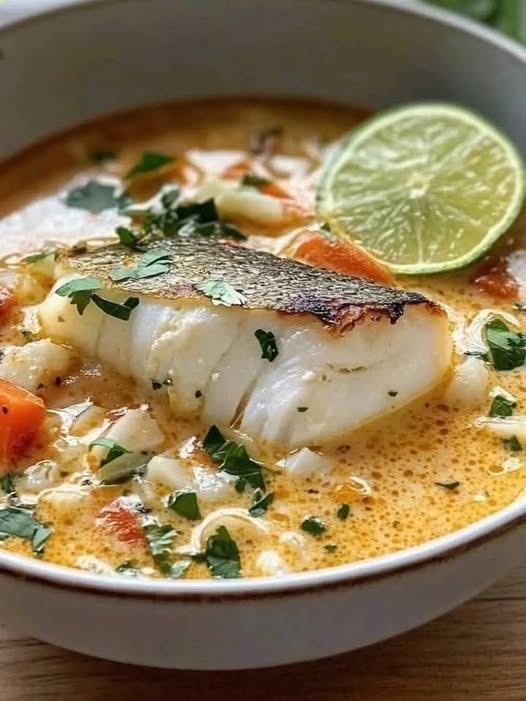

Coconut Lime Fish Soup is a warm, fragrant bowl that combines tender flaky fish with creamy coconut milk, fresh lime, garlic, ginger, and aromatic herbs. The coconut broth is rich and silky, while lime adds a bright, tangy finish that keeps every spoonful fresh rather than heavy.
This easy seafood soup is naturally protein-rich thanks to the fish and can be prepared in about 30 minutes. It is a wonderful choice for weeknight dinners, lighter comfort food, or anyone looking for a flavorful high-protein meal with a tropical twist.
Can This Coconut Lime Fish Soup Support Weight Loss Goals?
This soup can fit into a balanced weight-conscious eating pattern because fish provides protein while the broth-based preparation can be filling without relying on large amounts of starch. Coconut milk does contain a significant amount of fat and calories, so portion size and the type of coconut milk used can meaningfully affect the overall calorie content. Pairing the soup with vegetables and keeping added oils moderate can help create a balanced meal.
Does Coconut Lime Fish Soup Fit a High-Protein Lifestyle?
Yes, this soup is a strong fit for a high-protein lifestyle because flaky white fish provides the majority of the protein with relatively few carbohydrates. Coconut milk adds richness but contributes little protein, while vegetables such as mushrooms and spinach provide additional volume and nutrients. The soup is naturally low in carbohydrates when served without rice or noodles. One serving provides approximately 32 grams of protein, making it suitable for a protein-focused lunch or dinner.
Why This Recipe Is Special
- High-protein: Tender white fish provides a substantial protein base.
- Bright and creamy: Coconut milk creates richness while lime adds refreshing acidity.
- Low-carb friendly: The soup contains no noodles or rice.
- Fast to prepare: The fish cooks quickly directly in the fragrant broth.
- Tropical flavor: Ginger, garlic, lime, and coconut create a vibrant seafood combination.
My Personal Experience
- The lime really brings the soup to life.
I love adding fresh lime juice at the end because its acidity balances the creamy coconut broth beautifully. - The fish stays wonderfully tender.
Gently simmering the fish instead of boiling it aggressively keeps the fillets moist and flaky. - Ginger and garlic create an amazing aroma.
Cooking the aromatics briefly before adding the broth gives the soup a deeper, more developed flavor. - It feels comforting without being too heavy.
The coconut milk makes the broth silky, while the lime and fresh herbs keep the overall dish bright.
Perfect For
This soup is ideal for quick weeknight dinners, high-protein meal plans, low-carb dinners, cozy lunches, seafood lovers, light comfort food, and casual entertaining. It is especially enjoyable when you want something warm and satisfying without a heavy pasta or rice-based meal.
Why You’ll Love This Recipe
- Ready in about 30 minutes.
The fish cooks quickly, making this an excellent choice when you need dinner without a long cooking time. - Creamy without heavy cream.
Coconut milk gives the broth a silky texture and subtle sweetness. - Fresh and zesty.
Lime juice and cilantro provide a bright finish that balances the rich coconut. - Protein-packed.
A generous portion of white fish makes each bowl satisfying and protein-forward. - Easy to customize.
Add chili, shrimp, spinach, mushrooms, or extra lime depending on your preferences.
Common Mistakes to Avoid
- Boiling the fish too aggressively: A rolling boil can break up the fish and make it tough, so keep the broth at a gentle simmer.
- Adding lime juice too early: Extended cooking can dull the fresh citrus flavor, so add most of the lime juice near the end.
- Using too much coconut milk: Excess coconut milk can overpower the fish and significantly increase the richness; measure it carefully.
- Cutting the fish unevenly: Large pieces may take longer to cook while small pieces overcook, so cut the fish into similarly sized chunks.
Required Equipment
- Large heavy-bottomed pot — distributes heat evenly for gentle simmering.
- Chef’s knife — makes preparing fish and vegetables quick and precise.
- Cutting board — provides a stable surface for ingredient preparation.
- Wooden spoon — makes stirring the aromatic broth easy.
- Ladle — makes serving the hot soup neatly and safely.
Storage Instructions
Allow leftover soup to cool slightly before transferring it to airtight glass or BPA-free food-storage containers. Refrigerate for up to 3 days.
For best quality, freezing is possible but may slightly change the texture of the coconut broth and fish. If freezing, use freezer-safe containers and consume within 1–2 months.
Thaw frozen soup overnight in the refrigerator. Reheat gently in a saucepan over low to medium-low heat until hot, avoiding a vigorous boil so the fish does not become tough or break apart.
Recipe Details
- Preparation Time: 10 minutes
- Cooking Time: 20 minutes
- Total Time: 30 minutes
- Servings: 4
- Best Season: All-season
- Total Calories: Approximately 335 calories per serving
Ingredients
For the Soup
- 1½ lb (680 g) firm white fish fillets, such as cod, haddock, halibut, or tilapia
- 1 tbsp (15 mL) olive oil
- 1 small yellow onion, thinly sliced
- 3 cloves garlic, minced
- 1 tbsp (15 g) fresh ginger, finely grated
- 1 red bell pepper, thinly sliced
- 1 cup (100 g) sliced mushrooms
- 1 can (13.5 oz/400 mL) light coconut milk
- 3 cups (720 mL) low-sodium seafood or vegetable broth
- 1 tbsp fish sauce, optional
- 1 tsp ground turmeric
- ½ tsp ground cumin
- ¼ tsp red pepper flakes, optional
- 2 cups (60 g) fresh baby spinach
- 3 tbsp fresh lime juice, plus extra for serving
- 1 tsp lime zest
- ½ tsp salt, or to taste
- ¼ tsp black pepper
For Garnish
- ¼ cup fresh cilantro, chopped
- 2 green onions, thinly sliced
- Lime wedges
- Optional sliced red chili
Note: Choose a firm fish that holds together during simmering. If using frozen fish, thaw completely and pat it dry before cutting.
Directions
- Prepare the fish.
Pat the fish dry with paper towels and cut it into approximately 1½-inch chunks. Season lightly with black pepper and a small pinch of salt. - Heat the oil.
Place a large pot over medium heat. Add the olive oil and warm for approximately 30 seconds. - Sauté the aromatics.
Add the sliced onion and bell pepper. Cook for 3–4 minutes, stirring occasionally, until the vegetables begin to soften. - Add garlic and ginger.
Stir in the garlic and ginger. Cook over medium heat for 30–45 seconds, just until fragrant. Do not let the garlic brown. - Build the broth.
Add the coconut milk, broth, fish sauce, turmeric, cumin, and optional red pepper flakes. Stir well and bring the mixture to a gentle simmer over medium heat. - Add the mushrooms.
Stir in the mushrooms and simmer for 4–5 minutes, until they begin to soften. - Add the fish.
Gently place the fish pieces into the simmering broth. Reduce the heat to low or medium-low and cook for approximately 6–8 minutes. - Check the fish.
The fish should turn opaque and flake easily with a fork. Avoid stirring aggressively because the pieces can break apart. - Add the spinach.
Stir in the spinach and cook for 1–2 minutes, just until wilted. - Finish with lime.
Turn the heat to low and add the lime juice and lime zest. Taste and adjust salt, pepper, and lime as needed. - Check the texture.
The broth should be creamy and fragrant, the vegetables tender, and the fish flaky but still holding its shape. - Serve.
Ladle the soup into bowls and garnish with cilantro, green onions, sliced chili, and fresh lime wedges.
High-protein cooking tip: Keep the fish portion generous and avoid diluting the soup with large amounts of extra broth. For an even higher-protein seafood soup, add peeled shrimp during the final few minutes of cooking.
Nutrition Facts
Per Serving — Approximate
- Calories: 335 kcal
- Fat: 14 g
- Cholesterol: 85 mg
- Sodium: 720 mg
- Potassium: 850 mg
- Total Carbohydrates: 13 g
- Fiber: 3 g
- Net Carbs: 10 g
- Sugars: 6 g
- Protein: 32 g
- Calcium: 80 mg
Nutrition values are approximate and can vary depending on the type of fish, coconut milk, broth, fish sauce, and exact serving size.
Notes
- Storage: Refrigerate leftovers for up to 3 days or freeze for 1–2 months.
- Reheating: Reheat gently over low to medium-low heat and avoid boiling.
- Allergy note: Fish and fish sauce may contain or involve seafood allergens; check labels carefully if cooking for someone with allergies.
- Dairy-free: The recipe contains no dairy when prepared as written.
- Flavor boost: Add Thai basil, cilantro, extra lime zest, chili oil, or fresh sliced chili.
- Protein boost: Add shrimp or use a slightly larger portion of fish.
- Lower-carb serving: Enjoy the soup on its own or with additional leafy greens instead of rice or noodles.
- Coconut milk: Light coconut milk reduces the richness and calorie content compared with full-fat coconut milk, but full-fat coconut milk can be used for a richer broth.
Frequently Asked Questions
1. What fish works best for this soup?
Firm white fish such as cod, haddock, halibut, or tilapia works well because it remains tender while holding its shape.
2. Can I use frozen fish?
Yes, thaw it completely and pat it dry before adding it to the soup.
3. Can I add shrimp?
Yes, add peeled shrimp during the final 3–5 minutes of cooking so they remain tender.
4. Is Coconut Lime Fish Soup low-carb?
It is relatively low in carbohydrates when served without rice or noodles, with approximately 10 grams of net carbs per serving based on this recipe.
5. Can I use full-fat coconut milk?
Yes, but the soup will be richer and higher in calories and fat.
6. Can I make this soup ahead of time?
Yes, but for the best fish texture, prepare it no more than a day or two ahead and reheat it gently.