

Description
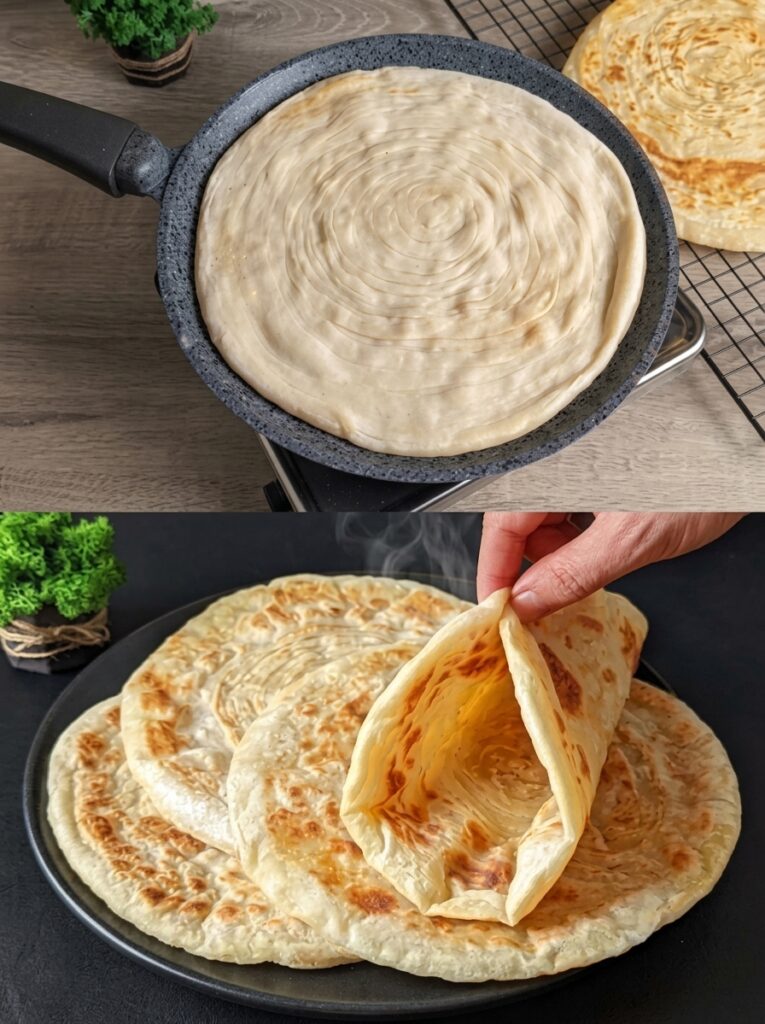
This Flaky Layered Homemade Flatbread is soft, tender, and lightly crisp around the edges, with delicate layers that make every bite satisfying. Made without traditional wheat flour, it uses protein-rich ingredients to create an easy low-carb alternative for wraps, breakfast plates, or savory snacks. A little seasoning and butter or olive oil between the layers gives it that delicious flaky texture without complicated techniques. It is quick enough for a busy day and versatile enough to pair with almost any savory filling.
Can This Flaky Layered Homemade Flatbread Support Weight Loss Goals?
This flatbread can fit into a balanced eating pattern because its main ingredients provide protein and can help make a meal more satisfying. Using a measured amount of cheese and cooking fat keeps the recipe balanced while still delivering plenty of flavor. It can be paired with vegetables, eggs, chicken, or other protein-rich foods to create a more complete meal. Rather than relying on claims that a food “burns fat” or “dries you out,” the overall portion and ingredients matter most.
Does This Flaky Layered Homemade Flatbread Fit a High-Protein Lifestyle?
Yes, this flatbread can fit well into a high-protein lifestyle because cottage cheese, mozzarella, and egg whites provide a strong protein base. Psyllium husk adds structure and fiber while keeping the carbohydrate content relatively low. The exact net carbs depend on the brands and quantities of dairy ingredients used. Serve it alongside eggs, chicken, turkey, or Greek yogurt for an even more protein-focused meal.
Why This Recipe is Special
- Flourless and low-carb — No traditional wheat flour is needed for this flexible flatbread.
- Protein-rich — Cottage cheese, mozzarella, and egg whites create a protein-forward recipe.
- Flaky layers — Folding the dough with a small amount of fat creates delicate layers.
- Quick to prepare — The dough comes together in minutes and cooks quickly in a skillet.
- Versatile — Use it as a wrap, side bread, breakfast flatbread, or savory snack.
My Personal Experience
- The layers are my favorite part.
Folding the dough several times creates a surprisingly flaky texture for a flourless flatbread.
The outside becomes lightly golden while the inside stays soft and tender. - The cottage cheese keeps the texture soft.
Blending the cottage cheese before mixing makes the dough much smoother.
It also adds protein without making the finished flatbread heavy. - A hot skillet gives the best finish.
Cooking over medium heat allows the outside to brown while the center cooks through.
I prefer cooking it without constantly moving it so the golden crust develops properly. - It works with almost everything savory.
I like serving it with eggs, grilled chicken, or a simple yogurt-based dip.
The mild flavor makes it easy to customize with herbs and spices.
Perfect For
This flatbread is ideal for quick breakfasts, weeknight meals, savory snacks, wraps, lunchboxes, and meal-prep sides. It is particularly useful when you want a flourless, lower-carb alternative to conventional flatbread. For a more complete meal, pair it with vegetables and another protein source.
Why You’ll Love This Recipe
- Flaky without regular flour
The folding technique creates delicate layers without traditional dough.
It gives the flatbread a satisfying texture that feels much more indulgent than expected. - Protein-forward ingredients
Cottage cheese, mozzarella, and egg whites contribute substantial protein.
This makes the flatbread more substantial than many traditional flatbread alternatives. - Fast and simple
The blender does most of the work when preparing the cottage cheese mixture.
Once the dough is ready, each flatbread cooks in just a few minutes. - Easy to customize
Add garlic powder, Italian herbs, chili flakes, or dried parsley for different flavors.
You can also use it as a base for a quick savory wrap. - Great texture
The edges become lightly crisp while the middle remains soft and flexible.
A short rest after cooking makes the layers even easier to separate.
Common Mistakes to Avoid
- Using unblended cottage cheese — Large curds can create an uneven dough, so blend until mostly smooth.
- Adding too much psyllium husk — Excess psyllium can make the flatbread dense and rubbery.
- Cooking over very high heat — The outside can brown too quickly before the center sets.
- Rolling the dough too thin — Extremely thin dough can become brittle instead of soft and flaky.
Required Equipment
- Food processor or blender — Creates a smooth cottage cheese mixture for a more uniform dough.
- Non-stick skillet — Helps the flatbread cook evenly with minimal sticking.
- Rolling pin — Makes it easier to achieve an even thickness.
- Parchment paper — Prevents the soft dough from sticking during rolling.
- Spatula — Allows the flatbread to be flipped without tearing.
Storage Instructions
Allow cooked flatbreads to cool completely before storing.
Place them between sheets of parchment paper in an airtight container and refrigerate for up to 3 days.
For longer storage, stack the cooled flatbreads with parchment between each piece and place them in a freezer-safe bag or container for up to 1 month.
Refrigeration and freezing do not remove the protein from the recipe, although the texture may become slightly softer after storage.
Recipe Details
Preparation Time: 10 minutes
Resting Time: 5 minutes
Cooking Time: 12 minutes
Total Time: 27 minutes
Servings: 4 flatbreads
Best Season: All-season
Total Calories: Approximately 155 calories per flatbread
Short 3-Line Description
A soft and flaky flourless flatbread made with cottage cheese, mozzarella, and egg whites.
It is protein-rich, relatively low in carbohydrates, and easy to prepare in a skillet.
Serve it with eggs, chicken, vegetables, dips, or your favorite savory filling.
📝 Ingredients
- 1 cup (225 g) low-fat cottage cheese
- ½ cup (50 g) shredded part-skim mozzarella
- ½ cup (120 g) liquid egg whites
- 2 tbsp (14 g) psyllium husk powder
- ½ tsp garlic powder
- ½ tsp dried Italian herbs
- ¼ tsp salt
- ¼ tsp black pepper
- 1 tbsp melted butter or olive oil, for layering and cooking
Ingredient note: Use finely ground psyllium husk powder rather than coarse psyllium flakes for the most consistent texture.
Directions
1. Blend the Wet Ingredients
Add cottage cheese, egg whites, and mozzarella to a blender or food processor.
Blend on medium speed for 30–45 seconds, until the mixture is mostly smooth.
2. Add the Dry Ingredients
Transfer the mixture to a bowl and add psyllium husk powder, garlic powder, Italian herbs, salt, and black pepper.
Stir thoroughly for about 30 seconds.
3. Rest the Dough
Let the mixture stand for 5 minutes.
Texture cue: The mixture should thicken into a soft, workable dough. If it remains very loose, allow another 1–2 minutes of resting time.
4. Divide and Roll
Divide the dough into 4 equal portions.
Place one portion between two sheets of parchment paper and gently roll it into a thin oval or round.
Avoid making it paper-thin because the flatbread needs enough thickness to hold its layers.
5. Create the Layers
Lightly brush the surface with a small amount of melted butter or olive oil.
Fold the dough over itself once or twice, then gently flatten it again.
This folding process creates the flaky layered texture.
6. Heat the Skillet
Place a non-stick skillet over medium heat.
Lightly grease the pan with a small amount of the remaining butter or oil.
Allow the pan to heat for approximately 1 minute.
7. Cook the Flatbread
Place one flatbread in the skillet.
Cook for approximately 2–3 minutes per side.
Visual cue: The surface should develop light golden-brown spots and the flatbread should feel set but still flexible.
8. Finish the Remaining Flatbreads
Repeat with the remaining dough.
Keep the cooked flatbreads covered with a clean kitchen towel while you finish the batch so they remain soft.
9. Serve
Serve warm with eggs, grilled chicken, vegetables, Greek yogurt dip, or your favorite savory filling.
High-protein tip: Pairing one flatbread with another protein source creates a more substantial and balanced meal rather than relying on the flatbread alone.
Nutrition Facts — Per Serving (Approximate)
- Calories: 155 kcal
- Fats: 7 g
- Cholesterol: 15 mg
- Sodium: 390 mg
- Potassium: 135 mg
- Total Carbohydrates: 7 g
- Fiber: 4 g
- Net Carbs: 3 g
- Sugars: 2 g
- Protein: 14 g
- Calcium: 145 mg
Nutrition values are approximate and can vary according to the cottage cheese, mozzarella, egg whites, and other brands used.
Notes
- Storage: Refrigerate for up to 3 days or freeze for up to 1 month.
- Reheating: Warm in a dry skillet over medium-low heat for 30–60 seconds per side, or microwave briefly.
- Allergy note: This recipe contains dairy and egg; check ingredient labels if preparing for someone with allergies.
- Flavor boost: Add smoked paprika, chili flakes, fresh herbs, or extra garlic powder.
- Texture tip: Do not overcook, as excessive heat can make the flatbread firm and chewy.
- Serving idea: Fill with scrambled eggs and vegetables for breakfast or shredded chicken and salad for lunch.
- Carbohydrate note: The recipe is low-carb rather than literally zero-carb because dairy ingredients naturally contain some carbohydrates.
Frequently Asked Questions
1. Is this flatbread really zero-carb?
No, it is very low in carbohydrates but not literally zero-carb because cottage cheese, mozzarella, and other ingredients contain small amounts of carbohydrates.
2. Can I make it without psyllium husk?
Psyllium provides important structure, so removing it will significantly change the texture and make the flatbread harder to handle.
3. Why is my flatbread too soft?
It may need another minute of cooking or a slightly longer resting time for the psyllium to fully hydrate.
4. Can I use full-fat cottage cheese?
Yes, full-fat cottage cheese works, although it will increase the calorie and fat content.
5. Can I freeze these flatbreads?
Yes, separate them with parchment paper, place them in a freezer-safe container or bag, and freeze for up to 1 month.
6. What can I serve with this flatbread?
It pairs especially well with eggs, grilled chicken, turkey, vegetables, Greek yogurt dips, or savory cheese fillings.


