
Description
This Low-Carb Honey Soy Glazed Salmon is tender, flaky, savory, and lightly sweet, with a glossy glaze that caramelizes beautifully around the edges. Soy sauce, honey, garlic, and ginger create a bold combination that complements the rich flavor of salmon. It’s a protein-rich dinner that comes together quickly and can fit into a low-carb, high-protein lifestyle when paired with non-starchy vegetables.
Can This Low-Carb Honey Soy Glazed Salmon Support Weight Loss Goals?
Yes, this salmon recipe can fit into a balanced weight-management plan. Salmon provides high-quality protein and healthy fats, while the portion of honey is kept relatively small for flavor. Using a measured glaze and pairing the salmon with vegetables instead of high-calorie sides can help keep the overall meal balanced. Weight management depends on overall calorie intake and eating patterns rather than one specific recipe.
Does Low-Carb Honey Soy Glazed Salmon Fit a High-Protein Lifestyle?
Absolutely. Salmon is naturally rich in protein, making this recipe an excellent choice for a high-protein lifestyle. The glaze adds only a small amount of carbohydrates from honey and soy sauce, keeping the overall net carbs relatively low. For an even lower-carb version, use a low-sugar honey substitute. Serve with broccoli, asparagus, zucchini, or cauliflower rice for a protein-focused meal.
Why This Recipe Is Special
- High-protein: Salmon provides plenty of protein in every serving.
- Low-carb friendly: A small amount of honey provides sweetness without turning the dish into a sugary meal.
- Rich and flavorful: Garlic, ginger, soy sauce, and honey create a delicious savory-sweet glaze.
- Quick dinner: The salmon cooks in roughly 10–15 minutes.
- Restaurant-style finish: The glaze becomes glossy and caramelized as the salmon cooks.
My Personal Experience
- The glaze gives the salmon incredible flavor:
The combination of salty soy sauce and sweet honey works beautifully with rich salmon.
Garlic and ginger add extra depth without overpowering the fish. - The caramelized edges are my favorite:
The glaze thickens as it cooks and creates slightly sticky, browned edges.
Keeping an eye on the salmon during the final minutes helps prevent the honey from burning. - It’s an easy weeknight protein:
Salmon requires very little preparation before cooking.
The quick cooking time makes this especially useful when dinner needs to be ready fast. - Vegetables complete the meal perfectly:
I like serving the salmon with roasted broccoli or asparagus.
The vegetables balance the richness of the salmon and keep the meal low-carb friendly.
Perfect For
This glazed salmon is perfect for weeknight dinners, healthy lunches, meal prep, family meals, date-night dinners, high-protein meal plans, low-carb menus, keto-inspired meals, and quick seafood dinners. It’s also elegant enough for entertaining while being simple enough for everyday cooking.
Why You’ll Love This Recipe
- Sweet and savory:
Honey adds just enough sweetness to balance the salty soy sauce.
Garlic and ginger give the glaze a bold Asian-inspired flavor. - Protein-packed:
Salmon provides substantial protein along with naturally occurring fats.
It makes the centerpiece of a satisfying meal. - Low-carb friendly:
The recipe uses a modest amount of honey rather than a heavy sugary sauce.
Pairing it with vegetables keeps the complete meal relatively low in carbohydrates. - Fast to prepare:
The glaze takes only a few minutes to mix together.
The salmon then cooks quickly until flaky and tender. - Beautiful presentation:
The glossy glaze gives the salmon a golden, appetizing finish.
A sprinkle of sesame seeds and green onion makes it look even more inviting.
Common Mistakes to Avoid
- Using too much glaze: Excess honey can burn before the salmon finishes cooking.
- Overcooking the salmon: Cooking too long can make the fish dry instead of moist and flaky.
- Not drying the salmon: Excess surface moisture can prevent the glaze from sticking properly.
- Adding the full glaze too early at very high heat: The honey can caramelize too quickly, so moderate heat is preferable.
Required Equipment
- Baking sheet or air-fryer basket — provides a stable surface for cooking the salmon.
- Parchment paper — makes cleanup easier and helps prevent sticking.
- Small mixing bowl — makes combining the glaze ingredients simple.
- Pastry brush — spreads the glaze evenly over the salmon.
- Instant-read thermometer — helps monitor the salmon’s internal temperature.
Storage Instructions
Allow leftover salmon to cool before placing it in a shallow airtight container. Refrigerate within about 2 hours and use within 3–4 days.
For longer storage, wrap individual portions tightly and place them in a freezer-safe container or bag. Freeze for up to 2–3 months for best quality.
Thaw frozen salmon overnight in the refrigerator. Reheat gently in the oven at 300°F (150°C) or in the microwave using short intervals to help prevent the salmon from drying out.
The salmon remains protein-rich after refrigeration or freezing, although reheating may slightly affect its texture.
Recipe Details
Preparation Time: 10 minutes
Cooking Time: 12–15 minutes
Total Time: About 25 minutes
Servings: 4
Best Season: All-season
Total Calories: Approximately 390 calories per serving
Short Description
Tender salmon is coated in a savory honey-soy glaze with garlic and ginger.
The glaze becomes glossy and lightly caramelized as the salmon cooks.
It’s a quick, protein-rich dinner that works beautifully with low-carb vegetables.
📝 Ingredients
For the Salmon
- 4 salmon fillets, about 6 oz (170 g) each
- ½ teaspoon salt
- ¼ teaspoon black pepper
- 1 teaspoon olive oil
For the Honey Soy Glaze
- 2 tablespoons low-sodium soy sauce
- 1 tablespoon honey
- 2 cloves garlic, finely minced
- 1 teaspoon fresh ginger, grated
- 1 tablespoon fresh lemon juice
- 1 teaspoon sesame oil
Optional Garnish
- 1 teaspoon sesame seeds
- 1 green onion, thinly sliced
- Fresh cilantro or parsley
Ingredient note: For a stricter low-carb version, use a low-sugar honey substitute in place of regular honey. Use gluten-free tamari instead of soy sauce if needed.
Directions
1. Preheat the oven
Preheat your oven to 400°F (205°C).
Line a baking sheet with parchment paper.
2. Prepare the salmon
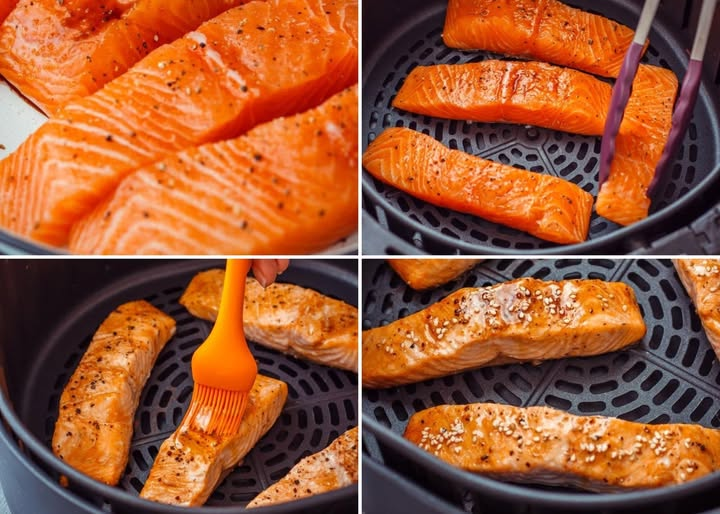
Pat the salmon fillets dry with paper towels.
Place them skin-side down on the prepared baking sheet.
Lightly brush with olive oil and season with salt and black pepper.
Texture tip: Drying the salmon first helps the glaze adhere better and encourages a more attractive finish.
3. Make the glaze
In a small bowl, whisk together the soy sauce, honey, minced garlic, grated ginger, lemon juice, and sesame oil.
Mix until smooth.
High-protein cooking tip: Keep the glaze measured rather than adding large amounts. The salmon itself provides most of the protein, while limiting excess glaze helps control added sugars and calories.
4. Brush the salmon
Brush approximately half of the glaze evenly over the top of each salmon fillet.
Reserve the remaining glaze for later.
5. Bake the salmon
Place the salmon in the preheated oven.
Bake at 400°F (205°C) for approximately 8 minutes.
6. Add more glaze
Remove the baking sheet carefully.
Brush the remaining glaze over the salmon.
Return it to the oven.
7. Finish cooking
Continue baking for approximately 4–7 minutes, depending on the thickness of the fillets.
Visual cue: The salmon should appear opaque around the edges and should flake easily when gently pressed with a fork.
For food safety, check the thickest part with an instant-read thermometer and cook according to your preferred safe doneness.
8. Caramelize the glaze
For a more caramelized finish, switch the oven to broil for approximately 1–2 minutes.
Watch carefully during this step because honey can brown quickly.
Visual cue: The glaze should look glossy, slightly bubbling, and lightly browned around the edges.
9. Rest the salmon
Remove the salmon from the oven.
Let it rest for 2–3 minutes.
This allows the juices to settle while the glaze thickens slightly.
10. Garnish and serve
Sprinkle with sesame seeds and sliced green onion if desired.
Serve immediately with steamed broccoli, asparagus, green beans, zucchini, or cauliflower rice.
Nutrition Facts
Per Serving – Approximate
- Calories: 390 kcal
- Fat: 24 g
- Cholesterol: 95 mg
- Sodium: 620 mg
- Potassium: 780 mg
- Total Carbohydrates: 9 g
- Fiber: 0.5 g
- Net Carbs: 8.5 g
- Sugars: 7 g
- Protein: 35 g
- Calcium: 25 mg
Nutrition values are approximate and can vary according to salmon size, soy sauce brand, honey quantity, and other ingredients.
Notes
- Storage: Refrigerate leftovers in an airtight container for 3–4 days.
- Reheating: Reheat gently at 300°F (150°C) until warmed through.
- Freezing: Freeze cooked salmon for up to 2–3 months.
- Allergy notes: Contains fish and soy. Sesame oil and seeds are also used if included.
- Gluten-free option: Use certified gluten-free tamari instead of regular soy sauce.
- Lower-carb option: Replace honey with a suitable low-sugar honey alternative.
- Flavor boost: Add red pepper flakes or a little sriracha for heat.
- Freshness boost: Finish with fresh lemon juice, cilantro, or green onion just before serving.
- Protein tip: Serve with vegetables or a salad rather than a high-carbohydrate side for a more protein-focused meal.
- Cooking tip: Keep a close eye on the salmon during broiling because the honey glaze can darken quickly.
Frequently Asked Questions
1. Can I make this salmon in the air fryer?
Yes, cook the glazed salmon in a preheated air fryer at approximately 375°F (190°C) until flaky and cooked through, usually around 8–12 minutes depending on thickness.
2. How can I make the recipe lower in carbs?
Replace the regular honey with a low-sugar honey alternative and serve the salmon with non-starchy vegetables.
3. Can I use frozen salmon?
Yes, but thaw it completely and pat it very dry before applying the glaze for the best texture.
4. Can I substitute tamari for soy sauce?
Yes, tamari works well and is a convenient gluten-free alternative when using a certified gluten-free product.
5. What vegetables pair well with honey soy salmon?
Broccoli, asparagus, zucchini, green beans, cauliflower rice, and leafy salads all pair well with the savory-sweet glaze.
6. How do I keep salmon from drying out?
Avoid overcooking it and begin checking the thickest part toward the end of the recommended cooking time.